
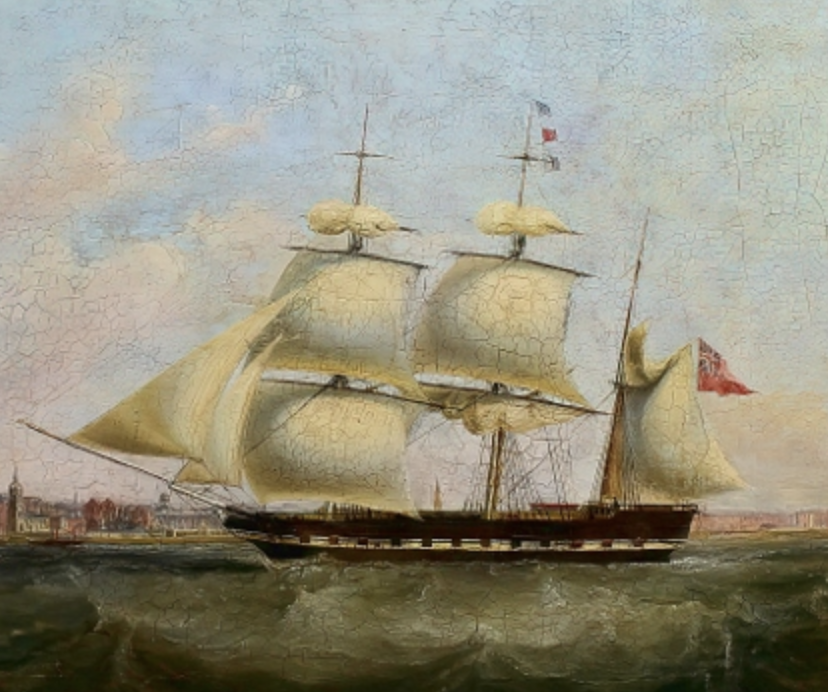
Painting of Lady East
Francis Hemming, born in 1810 in a village near Birmingham, was convicted of theft in 1823, and transported, aged 13. He arrived in Hobart in 1825, having survived a shocking variety of punishments on land and sea. Ferocious punishments continued for some years, but he survived. In 1840, at the age of 30 he married 18year-old Mary Ann O’Neil who had recently arrived from Ireland. The couple's marriage was solemnised in the Catholic church in Wollongong. Francis and his partner, George Ancell, operated a butcher’s shop until 1842 when they defaulted on debts and could not extract money from their debtors. Declared bankrupt, the Hemmings lost all their disposable assets.
After a period of rebuilding in inland Bungonia, the family came to Sydney, where they first lodged with Mary Ann’s brother Malachi, in Pyrmont. Francis probably learned the technologies of tallow making and bone-boiling from his brother-in-law. He applied those skills when the family moved to May Lane (which no longer exists), near present-day Broadway and Blackwattle Creek. There they created a bone boiling business, close to abattoirs which provided the raw material. The boiled bones then enabled the processing of tallow (for candles and soap). This precinct of abattoirs, tallow makers and bone boilers was notorious for its bad smells, so it is not surprising that the family moved about 1860 – to White and Piper Streets in Leichhardt. Francis and Mary Ann raised a large and prosperous family which inherited a very substantial estate when Francis died in 1883.
Francis had scant education and endured vicious treatment as a child and young man. Yet he and Mary Ann found the courage and the family support to overcome bankruptcy, remorseless labour and noisome working conditions. Their years in Pyrmont were – as for other families – the midpoint of that epic journey.